I have a favorite aunt. We call her tita Tootsie. Apart from it being her nickname, I suppose it fits her personality appropriately if "tootsie" is to become a word that describes "light, bubbly, and funny". She's married to a jew. She's now back in the US and the only way I get news from her is via her insightful emails.
Today I got to read her latest. I find it very interesting and if you're the type that values faith, this should be interesting to you too. Read on.

'You're a Christian, aren't you, son?'
'Yes sir,' the student says.
'So you believe in God?'
'Absolutely '
'Is God good?'
'Sure! God's good.'
'Is God all-powerful? Can God do anything?'
'Yes'
'Are you good or evil?'
'The Bible says I'm evil.'
The professor grins knowingly. 'Aha! The Bible! He considers for a moment. 'Here's one for you. Let's say there's a sick person over here and you can cure him. You can do it. Would you help him? Would you try?'
'Yes sir, I would.'
'So you're good...!'
'I wouldn't say that.'
'But why not say that? You'd help a sick and maimed person if you could. Most of us would if we could. But God doesn't.'
The student does not answer, so the professor continues. 'He doesn't, does he? My brother was a Christian who died of cancer, even though he prayed to Jesus to heal him. How is this Jesus good? Can you answer that one?'
The student remains silent. 'No, you can't, can you?' the professor says. He takes a sip of water from a glass on his desk to give the student time to relax. 'Let's start again, young fella. Is God good?'
'Er..yes,' the student says.
'Is Satan good?'
The student doesn't hesitate on this one.. 'No.'
'Then where does Satan come from?'
The student falters. 'From God'
'That's right. God made Satan, didn't he? Tell me, son. Is there evil in this world?'
'Yes, sir.'
'Evil's everywhere, isn't it? And God did make everything, correct?'
'Yes'
'So who created evil?' The professor continued, 'If God created everything, then God created evil, since evil exists, and according to the principle that our works define who we are, then God is evil.'
Again, the student has no answer. 'Is there sickness? Immorality? Hatred? Ugliness? All these terrible things, do they exist in this world?'
The student squirms on his feet. 'Yes.'
'So who created them ?'
The student does not answer again, so the professor repeats his question. 'Who created them?' There is still no answer. Suddenly the lecturer breaks away to pace in front of the classroom. The class is mesmerized. 'Tell me,' he continues onto another student. 'Do you believe in Jesus Christ, son?'
The student's voice betrays him and cracks. 'Yes, professor, I do.'
The old man stops pacing. 'Science says you have five senses you use to identify and observe the world around you. Have you ever seen Jesus?'
'No sir. I've never seen Him.'
'Then tell us if you've ever heard your Jesus?'
'No, sir, I have not.'
'Have you ever felt your Jesus, tasted your Jesus or smelt your Jesus? Have you ever had any sensory perception of Jesus Christ, or God for that matter?'
'No, sir, I'm afraid I haven't.'
'Yet you still believe in him?'
'Yes'
'According to the rules of empirical, testable, demonstrable protocol, science says your God doesn't exist... What do you say to that, son?'
'Nothing,' the student replies.. 'I only have my faith.'
'Yes, faith,' the professor repeats. 'And that is the problem science has with God. There is no evidence, only faith.'
The student stands quietly for a moment, before asking a question of His own. 'Professor, is there such thing as heat? '
' Yes.
'And is there such a thing as cold?'
'Yes, son, there's cold too.'
'No sir, there isn't.'
The professor turns to face the student, obviously interested. The room suddenly becomes very quiet. The student begins to explain. 'You can have lots of heat, even more heat, super-heat, mega-heat, unlimited heat, white heat, a little heat or no heat, but we don't have anything called 'cold'. We can hit down to 458 degrees below zero, which is no heat, but we can't go any further after that. There is no such thing as cold; otherwise we would be able to go colder than the lowest -458 degrees. Every body or object is susceptible to study when it has or transmits energy, and heat is what makes a body or matter have or transmit energy.. Absolute zero (-458 F) is the total absence of heat. You see, sir, cold is only a word we use to describe the absence of heat. We cannot measure cold. Heat we can measure in thermal units because heat is energy. Cold is not the opposite of heat, sir, just the absence of it.'
Silence across the room. A pen drops somewhere in the classroom, sounding like a hammer.
'What about darkness, professor. Is there such a thing as darkness?'
'Yes,' the professor replies without hesitation. 'What is night if it isn't darkness?'
'You're wrong again, sir. Darkness is not something; it is the absence of something. You can have low light, normal light, bright light, flashing light, but if you have no light constantly you have nothing and it's called darkness, isn't it? That's the meaning we use to define the word. In reality, darkness isn't. If it were, you would be able to make darkness darker, wouldn't you?'
The professor begins to smile at the student in front of him. This will be a good semester. 'So what point are you making, young man?'
'Yes, professor. My point is, your philosophical premise is flawed to start with, and so your conclusion must also be flawed.'
The professor's face cannot hide his surprise this time. 'Flawed? Can you explain how?'
'You are working on the premise of duality,' the student explains.. 'You argue that there is life and then there's death; a good God and a bad God. You are viewing the concept of God as something finite, something we can measure. Sir, science can't even explain a thought.' 'It uses electricity and magnetism, but has never seen, much less fully understood either one. To view death as the opposite of life is to be ignorant of the fact that death cannot exist as a substantive thing. Death is not the opposite of life, just the absence of it.' 'Now tell me, professor. Do you teach your students that they evolved from a monkey?'
'If you are referring to the natural evolutionary process, young man, yes, of course I do.'
'Have you ever observed evolution with your own eyes, sir?'
The professor begins to shake his head, still smiling, as he realizes where the argument is going. A very good semester, indeed.
'Since no one has ever observed the process of evolution at work and cannot even prove that this process is an on-going endeavor, are you not teaching your opinion, sir? Are you now not a scientist, but a preacher?'
The class is in uproar. The student remains silent until the commotion has subsided. 'To continue the point you were making earlier to the other student, let me give you an example of what I mean.' The student looks around the room. 'Is there anyone in the class who has ever seen the professor's brain?' The class breaks out into laughter. 'Is there anyone here who has ever heard the professor's brain, felt the professor's brain, touched or smelt the professor's brain? No one appears to have done so.. So, according to the established rules of empirical, stable, demonstrable protocol, science says that you have no brain, with all due respect, sir.' 'So if science says you have no brain, how can we trust your lectures, sir?'
Now the room is silent. The professor just stares at the student, his face unreadable. Finally, after what seems an eternity, the old man answers. 'I Guess you'll have to take them on faith.'
'Now, you accept that there is faith, and, in fact, faith exists with life,' the student continues. 'Now, sir, is there such a thing as evil?' Now uncertain, the professor responds, 'Of course, there is. We see it Everyday. It is in the daily example of man's inhumanity to man. It is in The multitude of crime and violence everywhere in the world.. These manifestations are nothing else but evil.'
To this the student replied, 'Evil does not exist sir, or at least it does not exist unto itself. Evil is simply the absence of God.. It is just like darkness and cold, a word that man has created to describe the absence of God. God did not create evil. Evil is the result of what happens when man does not have God's love present in his heart. It's like the cold that comes when there is no heat or the darkness that comes when there is no light.'
The professor sat down.
If you read it all the way through and had a smile on your face when you finished, mail to your friends and family with the title 'God vs. Science'
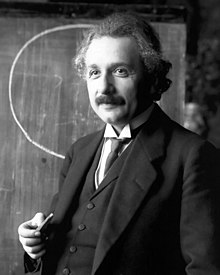
The student was Albert Einstein.
Albert Einstein wrote a book titled 'God vs. Science' in 1921.
Seek...
Showing posts with label opinions. Show all posts
Tuesday, April 12, 2011
Saturday, March 19, 2011
No they're not dumb
Decisions are made based on the amount of information presented to you. And more often you'll find out how much of that essential information was lacking or needed based from the results of that decision.
If the information isn't ripe, complete, or satisfied, then there is a high possibility of wrong assumptions.
I've met a lot of agents from companies who always fall short of intuitiveness and pro-activeness. Probably because they pretend too much that they know enough. No they don't. I wish I could say they're dumb but they're not. Lazy maybe but not dumb.
So if you encounter people like these, it's either you replace them or reeducate them. That's where your leadership trait kicks in. The choice is yours.
If the information isn't ripe, complete, or satisfied, then there is a high possibility of wrong assumptions.
I've met a lot of agents from companies who always fall short of intuitiveness and pro-activeness. Probably because they pretend too much that they know enough. No they don't. I wish I could say they're dumb but they're not. Lazy maybe but not dumb.
So if you encounter people like these, it's either you replace them or reeducate them. That's where your leadership trait kicks in. The choice is yours.
Labels:
concerns,
decision making,
ideas,
issues,
leadership,
management,
opinions
Thursday, March 10, 2011
Don't just satisfy
Customer satisfaction is such an overrated statement. We all know that when a customer buys your product or hires your service, he/she either needs it or wants it and is already satisfied. But what's often done is failing to excite them.
A taxi driver should not assume that their passenger knows the route. He travels the road every minute every day and therefore should know the best route to a less congested traffic. The passenger is already satisfied with taking the cab. But the driver could induce excitement by simply asking which route he/she prefers to take. How simple could that be? And it only takes a few seconds to deliver and it doesn't cost him anything.
A government employee could excite a citizen by giving accurate procedures. The government can make a citizen even happier if it can reduce if not simplify the required documents to process. There is better and positive result if the government charges fees one-time on the same amount than charging on a per-document basis. This doesn't cost anything at all. What it needs is just to espouse trust.
A band can excite their fans by going to their table and talk with them after their gig. Their fans are already satisfied with the performance. But good conversations are priceless and can build more fans via word-of-mouth (fans would tell their friends that you sat beside them over beer). This doesn't cost the band at all.
So don't just satisfy. Learn to excite so they will talk more about you. It goes a long a way.
A taxi driver should not assume that their passenger knows the route. He travels the road every minute every day and therefore should know the best route to a less congested traffic. The passenger is already satisfied with taking the cab. But the driver could induce excitement by simply asking which route he/she prefers to take. How simple could that be? And it only takes a few seconds to deliver and it doesn't cost him anything.
A government employee could excite a citizen by giving accurate procedures. The government can make a citizen even happier if it can reduce if not simplify the required documents to process. There is better and positive result if the government charges fees one-time on the same amount than charging on a per-document basis. This doesn't cost anything at all. What it needs is just to espouse trust.
A band can excite their fans by going to their table and talk with them after their gig. Their fans are already satisfied with the performance. But good conversations are priceless and can build more fans via word-of-mouth (fans would tell their friends that you sat beside them over beer). This doesn't cost the band at all.
So don't just satisfy. Learn to excite so they will talk more about you. It goes a long a way.
Labels:
customer satisfaction,
ideas,
leadership,
management,
marketing,
opinions
Monday, March 7, 2011
The extra mile
"That's not my job."
"I didn't do it."
"It's your job now not mine."
"Not my business."
"I'm busy."
"Oh, I forgot."
We hear these comments in the workplace. Many times. And these are the main reasons why customers, clients, and even friends hate you. Because you failed to assure them of your role and responsibility.
But the truth is that what the customers really want to know is if you are doing something about it regardless of when or how you will deliver (of course they want it asap but there's no such thing really).
If your document didn't get to the destination, don't blame the postal service yet. If you made a mistake on the price, don't say it's his/her fault. Do the extra mile. Re-educate yourself of how the process went. Then report. I've done it. The customer understood and even advised a better method. Trust and loyalty was built even stronger.
So instead of saying any of the above, excite them. Say,"Yes, ma'am it's in my to-do list." Or ,"I'll be back with an answer in a day or two." Do not rub off your role from them. Keep the loyalty in. It's priceless.
More importantly, don't say you're busy... because we all are.
"I didn't do it."
"It's your job now not mine."
"Not my business."
"I'm busy."
"Oh, I forgot."
We hear these comments in the workplace. Many times. And these are the main reasons why customers, clients, and even friends hate you. Because you failed to assure them of your role and responsibility.
But the truth is that what the customers really want to know is if you are doing something about it regardless of when or how you will deliver (of course they want it asap but there's no such thing really).
If your document didn't get to the destination, don't blame the postal service yet. If you made a mistake on the price, don't say it's his/her fault. Do the extra mile. Re-educate yourself of how the process went. Then report. I've done it. The customer understood and even advised a better method. Trust and loyalty was built even stronger.
So instead of saying any of the above, excite them. Say,"Yes, ma'am it's in my to-do list." Or ,"I'll be back with an answer in a day or two." Do not rub off your role from them. Keep the loyalty in. It's priceless.
More importantly, don't say you're busy... because we all are.
Sunday, March 6, 2011
What are you?
Are you a doer? A planner? Or both?
If you are a doer, do you do things just for the sake of doing it or have you invested the time to understand its meaning. Did you really see the big picture? Or you're just in it because it's cool?
If you are a planner, do you plan for just one deadline? Or do you plan for a long term perspective?
Many of us have great ideas. But not all knows enough to run the start up.
Many of us have great skills. But not every skilled person is hyperactive. More often, it's easier to get lazy.
Many of us love to jump in the boat when the engine's up and ready to go. But not many are patient to wait during its planning and risk-taking stages.
Not many are planners. And sadly not many are true doers.
So what are you?
If you are a doer, do you do things just for the sake of doing it or have you invested the time to understand its meaning. Did you really see the big picture? Or you're just in it because it's cool?
If you are a planner, do you plan for just one deadline? Or do you plan for a long term perspective?
Many of us have great ideas. But not all knows enough to run the start up.
Many of us have great skills. But not every skilled person is hyperactive. More often, it's easier to get lazy.
Many of us love to jump in the boat when the engine's up and ready to go. But not many are patient to wait during its planning and risk-taking stages.
Not many are planners. And sadly not many are true doers.
So what are you?
Labels:
creativity,
ideas,
leadership,
management,
opinions
Thursday, March 3, 2011
Make meaning first
I believe every person has something valuable to do that could benefit many. I also believe that every person gets that itch to share what he or she has. What sets it apart is when and how it becomes valuable to many. Not all, just many.
Topping the charts used to be a measure of status quo. Respect used to be based on rank or position or prestigious titles. People salute you when you have it.
Thank God things have changed.
Nowadays, respect is more transparently visible from doing things that many can benefit from. You don't have to be the CEO or a high ranking person in an organization. It helps though. You get a good leverage there. But what's more important and really matters is what good you've done for many.
Make meaning first. Reward always comes after. Of course there's always a question of when.
Topping the charts used to be a measure of status quo. Respect used to be based on rank or position or prestigious titles. People salute you when you have it.
Thank God things have changed.
Nowadays, respect is more transparently visible from doing things that many can benefit from. You don't have to be the CEO or a high ranking person in an organization. It helps though. You get a good leverage there. But what's more important and really matters is what good you've done for many.
Make meaning first. Reward always comes after. Of course there's always a question of when.
Monday, January 10, 2011
How to present a problem
It's easier to criticize. It's easier to shut down. It's easier to quit. It's easier to bad mouth. It's easier to complain. These are just some of the obvious reactions people do when they feel inconvenient or see problems coming.
But haven't you noticed? These traits never get you anywhere near anything worth anyone's time. In fact, you may even find yourself moving in the wrong direction, attracting the wrong people, and then end up realizing you haven't done anything that benefits anyone at all.
Problems are windows for improvement. More often however, it's difficult to view it this way. It takes a remarkable mind and heart to acknowledge such occasions as opportunities. If you don't belong in this category of people... practice being one.
Better yet, try this.
Next time you see a problem, the next time you feel that a proposition seems not possible to happen, don't just rant or complain about it. Present the problem with probable scenarios and propose solutions.
Try and practice this approach for this year.
But haven't you noticed? These traits never get you anywhere near anything worth anyone's time. In fact, you may even find yourself moving in the wrong direction, attracting the wrong people, and then end up realizing you haven't done anything that benefits anyone at all.
Problems are windows for improvement. More often however, it's difficult to view it this way. It takes a remarkable mind and heart to acknowledge such occasions as opportunities. If you don't belong in this category of people... practice being one.
Better yet, try this.
Next time you see a problem, the next time you feel that a proposition seems not possible to happen, don't just rant or complain about it. Present the problem with probable scenarios and propose solutions.
Try and practice this approach for this year.
Sunday, January 9, 2011
Your worst foot is still your best foot
Everybody seemed to be more engaged in taking the good stuff in. Like veering focus in putting your best foot forward. On the other hand, most of us are appalled at the thought of failing... of getting our worst foot out.
And I'm not surprised to know that not many understands the essential benefits of doing or thinking the opposite.
Entrepreneurs have a different way of thinking. They often take the opposite route. If someone says this can't be done, they test it. This is not to be confused with ego. It's about learning and understanding why it is so.
Take for example Cebu Pacific's advanced promos. The idea of cutting down the price of tickets translates to passing the ridiculously expensive cost of advertising to word-of-mouth on the consumers.
When the stocks are down, the wise investors buy more shares instead of retracting.
Wonggoys professed that 'Kalayan', a track from their album, was the least liked material. Cattski braved in for the challenge, took it as the first song to work on. Her goal was not really to prove them wrong but to improve the unappealing.
My point is that when you only focus on admiring the best foot, you're also missing out the opportunity to make a difference. Yet if you take a little effort in seeing the worst foot in a good way, there is no reason why you cannot like the best side of it. Like seeing a problem as an opportunity rather than a threat.
Risk is good. Taking the opposite path is good. And only a few can see it this way. This is good too.
And I'm not surprised to know that not many understands the essential benefits of doing or thinking the opposite.
Entrepreneurs have a different way of thinking. They often take the opposite route. If someone says this can't be done, they test it. This is not to be confused with ego. It's about learning and understanding why it is so.
Take for example Cebu Pacific's advanced promos. The idea of cutting down the price of tickets translates to passing the ridiculously expensive cost of advertising to word-of-mouth on the consumers.
When the stocks are down, the wise investors buy more shares instead of retracting.
Wonggoys professed that 'Kalayan', a track from their album, was the least liked material. Cattski braved in for the challenge, took it as the first song to work on. Her goal was not really to prove them wrong but to improve the unappealing.
My point is that when you only focus on admiring the best foot, you're also missing out the opportunity to make a difference. Yet if you take a little effort in seeing the worst foot in a good way, there is no reason why you cannot like the best side of it. Like seeing a problem as an opportunity rather than a threat.
Risk is good. Taking the opposite path is good. And only a few can see it this way. This is good too.
Labels:
business,
cattski,
cebu pacific,
entrepreneurship,
ideas,
opinions,
wonggoys
Sunday, April 26, 2009
Labels build false characters
Prejudice leads to false character building.
Being judged or labeled may be inevitable. And while it happens, the judged eventually become what they were branded for because other people approached them as such.
For example, if we believe that all blonds are dumb, we will most likely talk to them as if they really are idiots. We approach them as such, they respond appropriately, then we respond back, they respond again and then us and then them and so on.
Characters shape up because sometimes we unknowingly look for the character we believe a person is suppose to be, usually based on how we first know or heard of him/her. In our exampe, the process created the "dumb blond" personality.
And if at the first attempt the dumb-blond-theory failed, some may opt to persist and insist. And the cycle goes on. We decide to stop only when the judgement is proven. Unaware that we are simply satisfying an equation that didn't exist.
Hasty conclusions. A self fulfillment prophesy. It's a recurring pattern yet we still fail often at it.
We never learn.
Being judged or labeled may be inevitable. And while it happens, the judged eventually become what they were branded for because other people approached them as such.
For example, if we believe that all blonds are dumb, we will most likely talk to them as if they really are idiots. We approach them as such, they respond appropriately, then we respond back, they respond again and then us and then them and so on.
Characters shape up because sometimes we unknowingly look for the character we believe a person is suppose to be, usually based on how we first know or heard of him/her. In our exampe, the process created the "dumb blond" personality.
And if at the first attempt the dumb-blond-theory failed, some may opt to persist and insist. And the cycle goes on. We decide to stop only when the judgement is proven. Unaware that we are simply satisfying an equation that didn't exist.
Hasty conclusions. A self fulfillment prophesy. It's a recurring pattern yet we still fail often at it.
We never learn.
Saturday, January 31, 2009
Hey Emo!!!
It's been a while since my last visit to Insoy's googlepages and didn't know he has a new one. Then I found this article. Hahaha... nothing against emo but this entry is truly a good one - wish I was the one who wrote it.
Labels:
cebu music scene,
ideas,
insoy,
missing filemon,
opinions
Subscribe to:
Posts (Atom)